
Hedge Trimming Service In Snohomish
Sharp Hedges, Clean Edges. Snohomish's Experienced Choice Since 1988.
Proudly serving Snohomish, Monroe, Marysville, Lake Stevens, Everett, and surrounding areas
What the Local Climate Does to Hedge Growth Rates
Our Climate Pushes Hedges Past the Point of Easy Recovery
In Snohomish, trimming hedges isn’t a once-a-decade task. It’s an ongoing requirement driven directly by the climate. The moist soils common across the area hold water long after the rain stops. That moisture, combined with the Pacific Northwest’s high annual rainfall, creates growing conditions that push hedges and ornamental shrubs far faster than most trimming guides assume.
If your hedge gained what looked like a foot of new growth in a single season, you’re not imagining it. Laurel, cypress, photinia, arborvitae, and other common Pacific Northwest species thrive in these conditions, sometimes aggressively so.. Pruning shrubs on a schedule calibrated for drier climates will leave you consistently behind.
Timing matters here in ways that aren’t obvious. Cutting certain species at the wrong point in their growth cycle can stress them badly or invite disease. Vegetation maintenance in Snohomish County requires knowing which plants are in the ground and when they actually respond well to being cut back.
Let a hedge get two or three seasons ahead of you, and the recovery pruning becomes a much harder job. Staying ahead of it is simpler, cheaper, and better for the plants.
Ask Us About Our Hedge Trimming Services
How Encroachment Creates Compounding Issues
Overgrown Hedges Don’t Stay a Cosmetic Problem
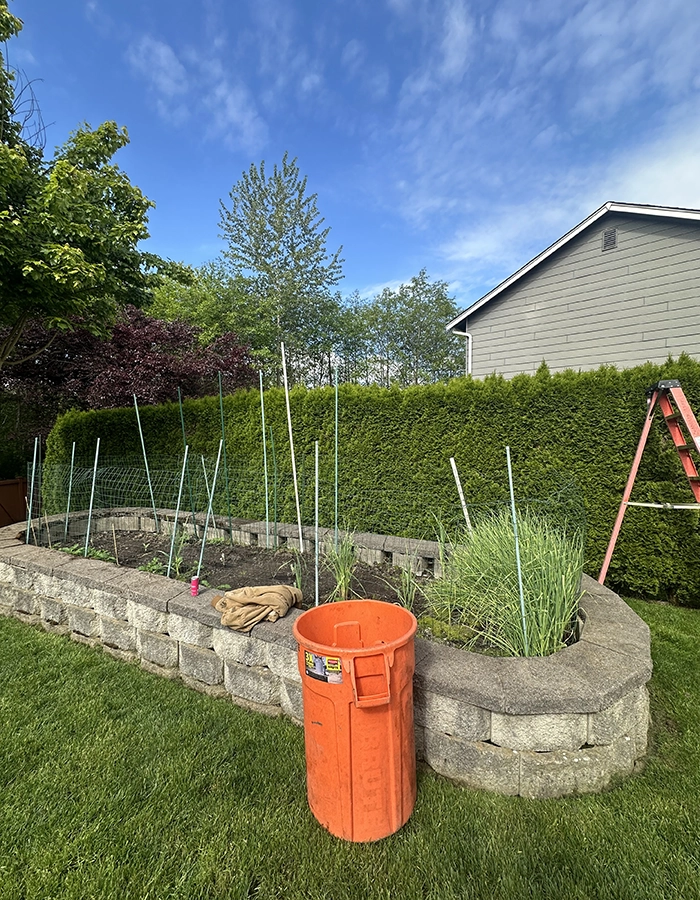
A hedge that’s pushed two feet past your fence line isn’t just an eyesore. It’s actively pressing against the structure, trapping moisture, and slowly warping or lifting fence boards, all at a cost that’s real money to fix. What starts as a trimming job becomes a fence repair conversation if you let it go long enough.
Many Snohomish properties deal with this regularly. Hedges that overhang sidewalks or driveways create sight-line problems at intersections and entry points, and once a neighbor or passerby flags the obstruction, you’re on the clock.
Proactively done clearance pruning is straightforward. Clearance pruning done reactively and under pressure tends to be more disruptive to the plant.
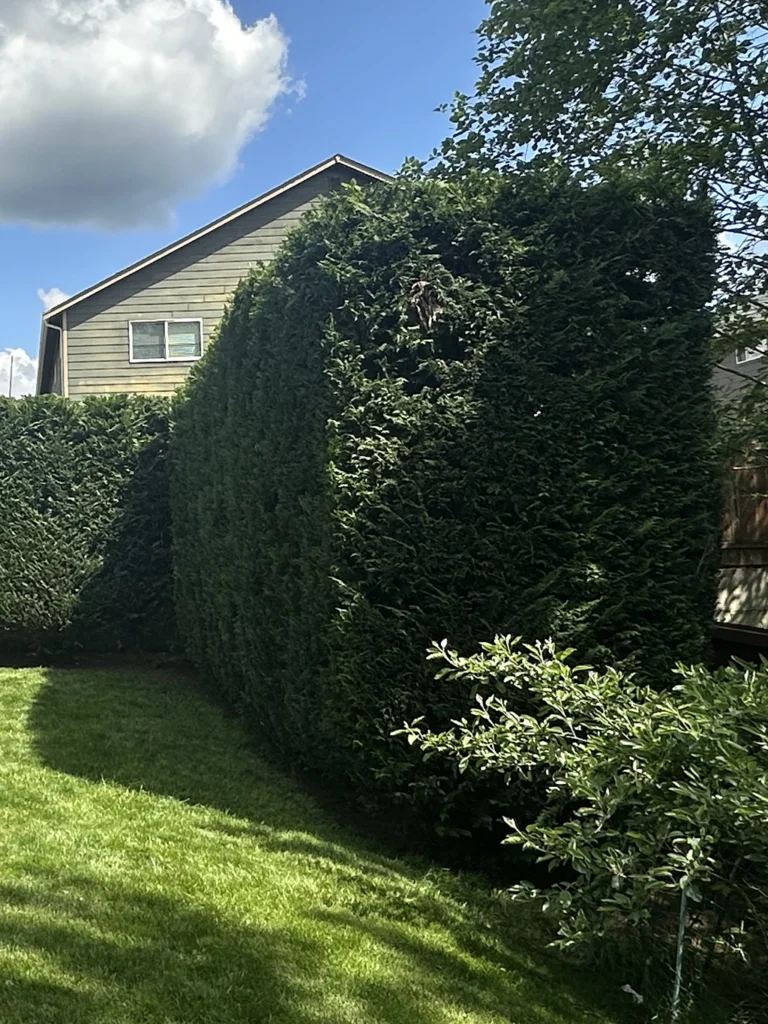
If your hedges haven’t been touched in two or more growing cycles, trimming at that stage often requires more aggressive cuts to restore shape. Heavy cutbacks stress plants more than routine maintenance would, and some species common in Pacific Northwest yards don’t recover cleanly from severe pruning.
Structural pruning while a hedge is still manageable keeps the work lighter and the plant healthier. Good tree care applies the same logic to landscape trees growing within or alongside your hedgerow.
Letting either get ahead of you just raises the cost and difficulty of the next visit.
Over 35 Years of Hedge Work in Snohomish
Over thirty-five years of hands-on hedge work across Snohomish County isn’t a credential you hang on a wall. It’s knowing how laurel responds differently from photinia on a newer lot, and adjusting your approach before a single cut is made. That kind of working knowledge doesn’t come from a franchise manual.
Some services point to certifications as a stand-in for real experience. What Chandler’s Tree and Stump Service has instead is a track record going back to 1988 on actual Snohomish properties, handled by experts who understand Pacific Northwest shrub species and how to trim them without triggering dieback or uneven regrowth.
If you’ve hired someone before who left your hedges lopsided or cut them back so hard they didn’t recover, you already know the difference between showing up and knowing what you’re doing. Every hedge trimming job here draws on decades of tree care services, tree trimming, and broader tree service work in this region.
Family-owned and operated since day one, this business has a direct stake in every job. Chandler’s is also licensed, insured, and bonded, so you’re covered. The result you get is clean, proportional hedges trimmed at the right depth, the first time.
From the In-Person Estimate to Cleanup. What You Should Expect
What a Professional Hedge Trimming Visit Actually Looks Like
Calling the office connects you with office staff or Brian directly. From there, Brian handles the estimate himself, the vast majority of the time, coming out to walk your property in person. Occasionally, a climber goes in his place. Either way, someone who knows hedge work is looking at your specific situation before any quote gets made.
During the estimate, the focus is on what the hedge actually needs. Species, current condition, proximity to fences or structures, and how aggressively it can be cut back without damaging it. Established formal hedges require a different approach than larger-acreage lots with dense, overgrown hedgerows.
On the day of the job, trimming is performed in a species-appropriate manner. If you have a hedge running alongside a fence line or close to a structure, the crew works carefully to avoid damage to the hedge. Clean cuts, controlled shaping, no guesswork on species that can’t recover from a hard cut at the wrong height.
Debris gets cleaned up before the team leaves. You’re not left raking clippings out of your lawn for the rest of the afternoon.
Tree Removal
Safe efficient removals
Tree Trimming
For beautiful, healthy trees
Hedge Trimming
Shaping of hedges and shrubs
Emergency Tree Services
Rapid response for emergencies
Storm Damage Prevention
Proactive protection before storms hit
Stump Grinding
Stump grinding for a usable landscape
The Difference Between Maintaining a Hedge and Reclaiming One
Schedule Trimming Consistently. Keep More Control
Consistent trimming and reclamation work are not the same job. A hedge that gets shaped once or twice a year stays responsive. You can direct its growth, keep it within your property line, and maintain the form it was planted to hold. A hedge that’s been left alone for two or three years is a different problem entirely.
Neglected hedges are a good example. What starts as a few inches of new growth becomes a wall that’s encroaching on a fence, blocking a sightline at the driveway, or pressing into a neighboring yard. At that point, aggressive cutting is necessary, and the plant itself takes longer to recover its intended shape.
If you’re thinking about setting up a recurring schedule rather than calling reactively, that’s worth raising during the estimate visit. Brian comes out in person the vast majority of the time, walks the property with you, and gives you a straight read on what the work involves and what it costs. No pressure, no upsell.